PROJECT_MODULES
Everything I've built, spanning robot learning, manipulation, autonomous vehicles, and embedded systems.
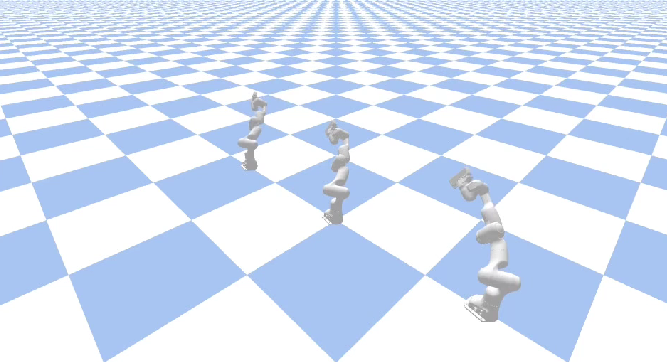
O-VLA: Trajectory Optimization Safety Layer
A morphology-agnostic optimizer that turns unsafe VLA-generated trajectories into collision-free, constraint-satisfying motion across 5 robot morphologies (6-23 DOF), in 0.03-0.44s per trajectory.
CASE_STUDY
Problem: VLA policies can output trajectories that violate joint limits or collide with the environment, and those failure modes don't transfer cleanly across robots with different kinematics.
My contribution: Built the full optimization layer, including a fast hierarchical approach (ProxQP + CHOMP) and a slower coupled-dynamics approach using Pinocchio RNEA.
Trade-off: the coupled-dynamics formulation gets better energy results but is meaningfully slower than the hierarchical approach, so the right choice depends on the latency budget.
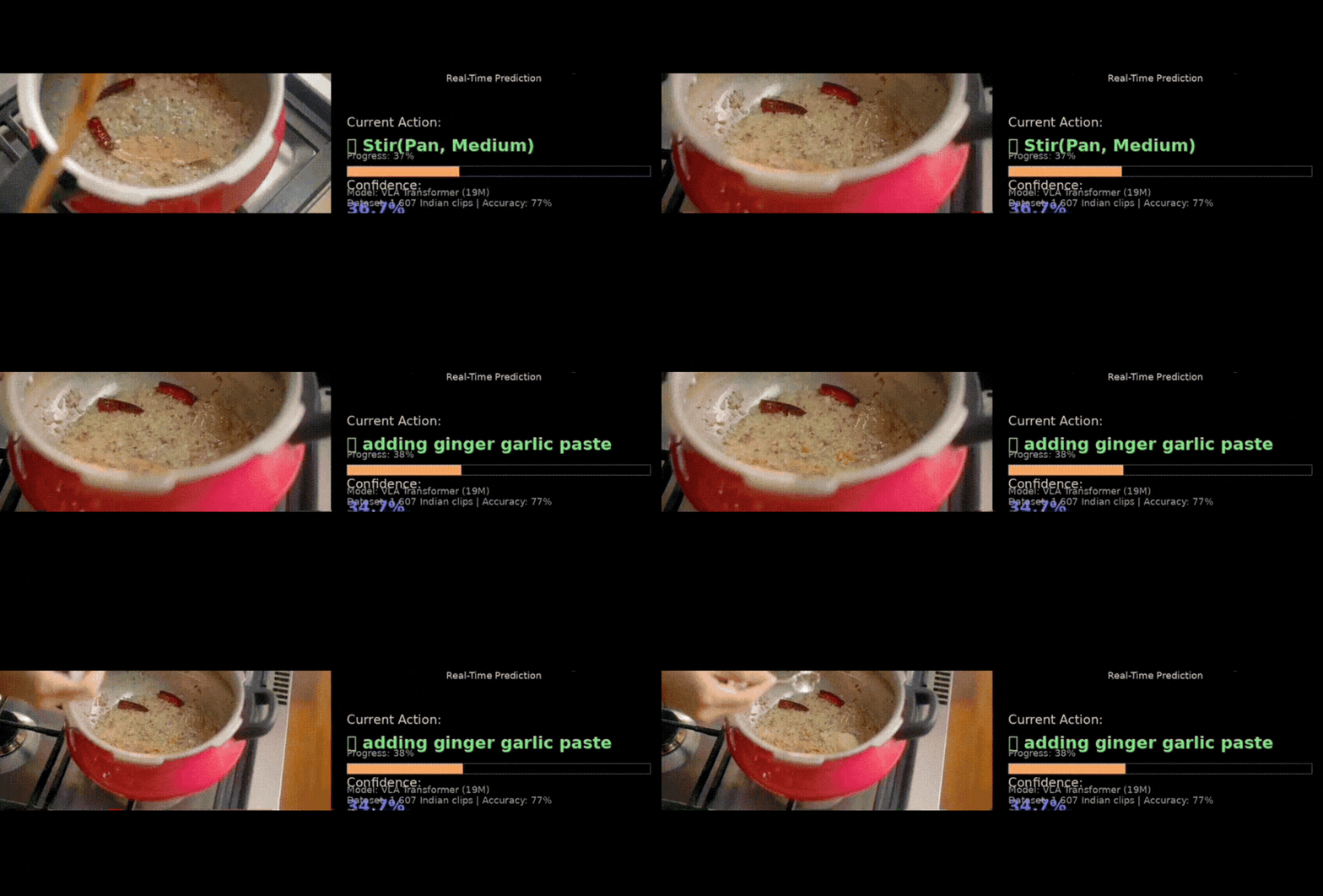
Vision-Language-Action System for Manipulation
An end-to-end pipeline that extracts actions from unconstrained cooking videos and maps them to robot primitives. Trained a 19M-parameter temporal model on 1.6k+ clips, including a novel Indian-cooking dataset.
CASE_STUDY
Problem: teaching a robot new manipulation skills usually means collecting robot-specific demonstration data, which doesn't scale to new tasks.
My contribution: built the pipeline end-to-end, including the YouTube action-extraction step, the 19M-parameter temporal model, and the Indian-cooking dataset used to test generalization.
Limitation: accuracy drops on cuisines and actions underrepresented in training (60-70% zero-shot transfer to Western cuisine vs. 77-85% overall), so it's not yet robust to fully out-of-distribution tasks.
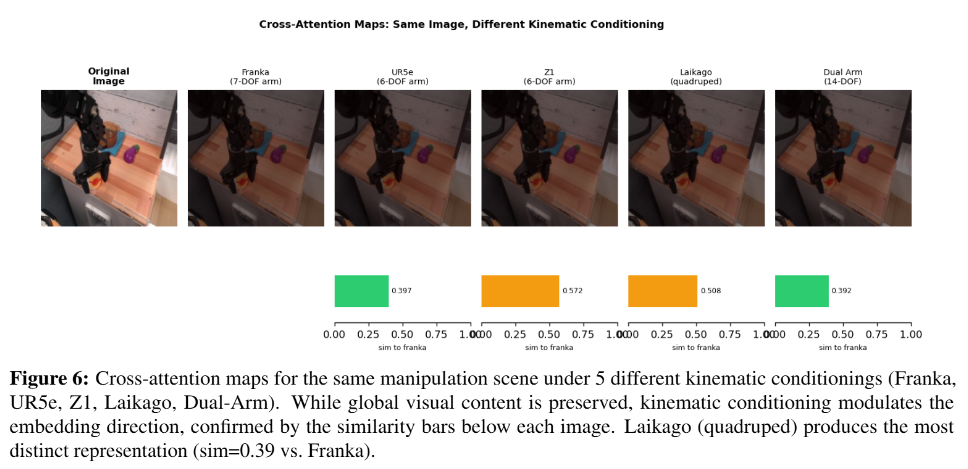
Cross-Embodiment Robot Perception
A cross-attention ViT conditioned on 32-dim kinematic features, producing embodiment-aware representations that generalize to unseen humanoid robots with morphologically meaningful embedding structure.
CASE_STUDY
Problem: visual representations trained around one robot's embodiment usually don't transfer to a robot with a different kinematic structure.
My contribution: designed and trained the cross-attention ViT and the 32-dim kinematic conditioning scheme.
Limitation: behavioral transfer, actual task success rates across robots, remains unproven due to rendering-environment constraints; the current evidence is representation quality, not closed-loop task performance.
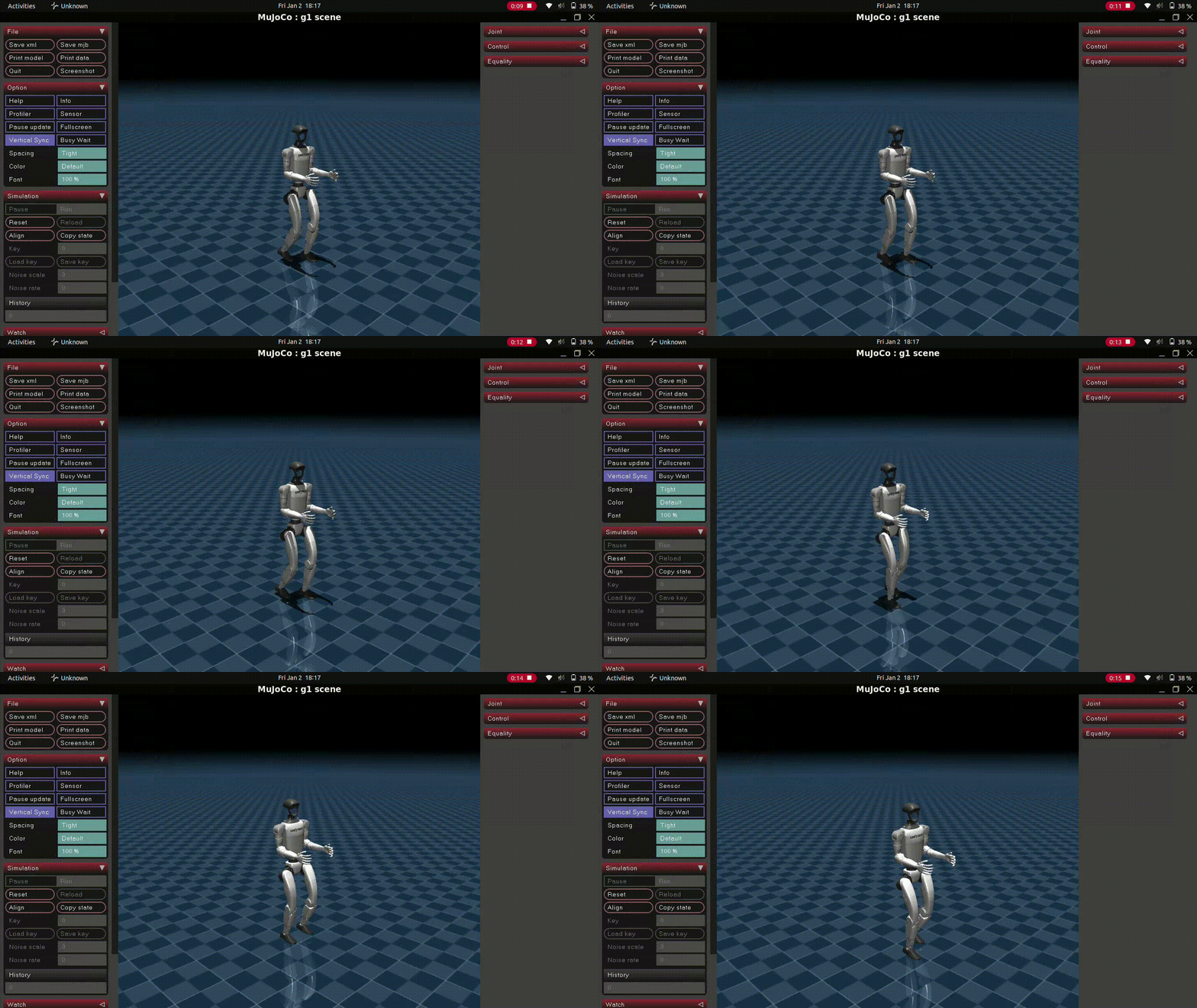
Humanoid Whole-Body Motion Planning
A whole-body stack using ZMP preview control, A* footstep planning, and MPC balance optimization, integrated with RL-based locomotion and Jacobian IK for coordinated walk-and-reach tasks on the Unitree G1.
CASE_STUDY
Problem: standard PD control for humanoid balance is energy-inefficient and struggles to recover from external perturbation.
My contribution: implemented the ZMP preview controller, A* footstep planner, and MPC balance optimization, then integrated RL-based locomotion with Jacobian IK for walk-and-reach tasks.
Limitation: validated in MuJoCo simulation only; not yet tested on physical hardware.
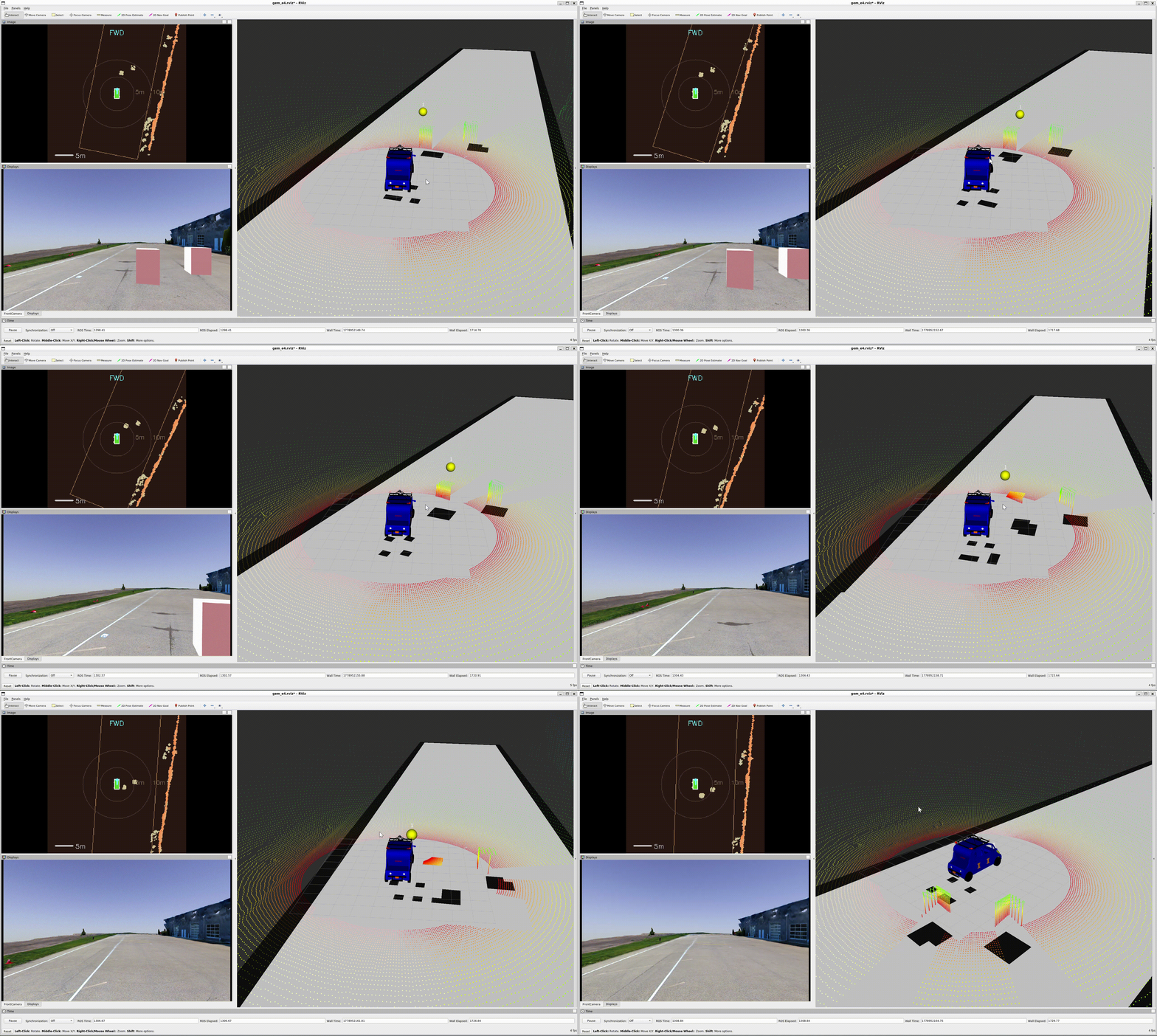
VLM-Based Autonomous Navigation
Intent-based navigation for GEM e4 using GPT-4o for goal localization, BEV perception, and Stanley control. 88% accuracy on KITTI for language-to-goal localization.
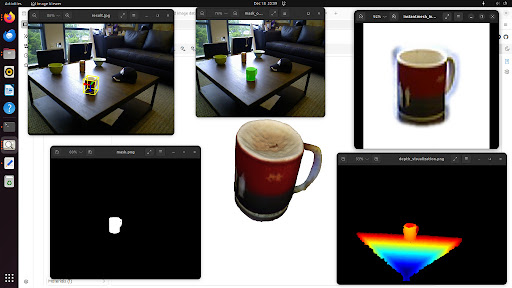
Open-Vocabulary 6D Pose Estimation
Zero-shot 6D pose pipeline combining VLM semantic inventory, SAM-3 segmentation, and Objaverse mesh retrieval. 76.5-100% ADD-S AUC on YCB-Video, plus an RGB-D variant with ensemble mesh selection.
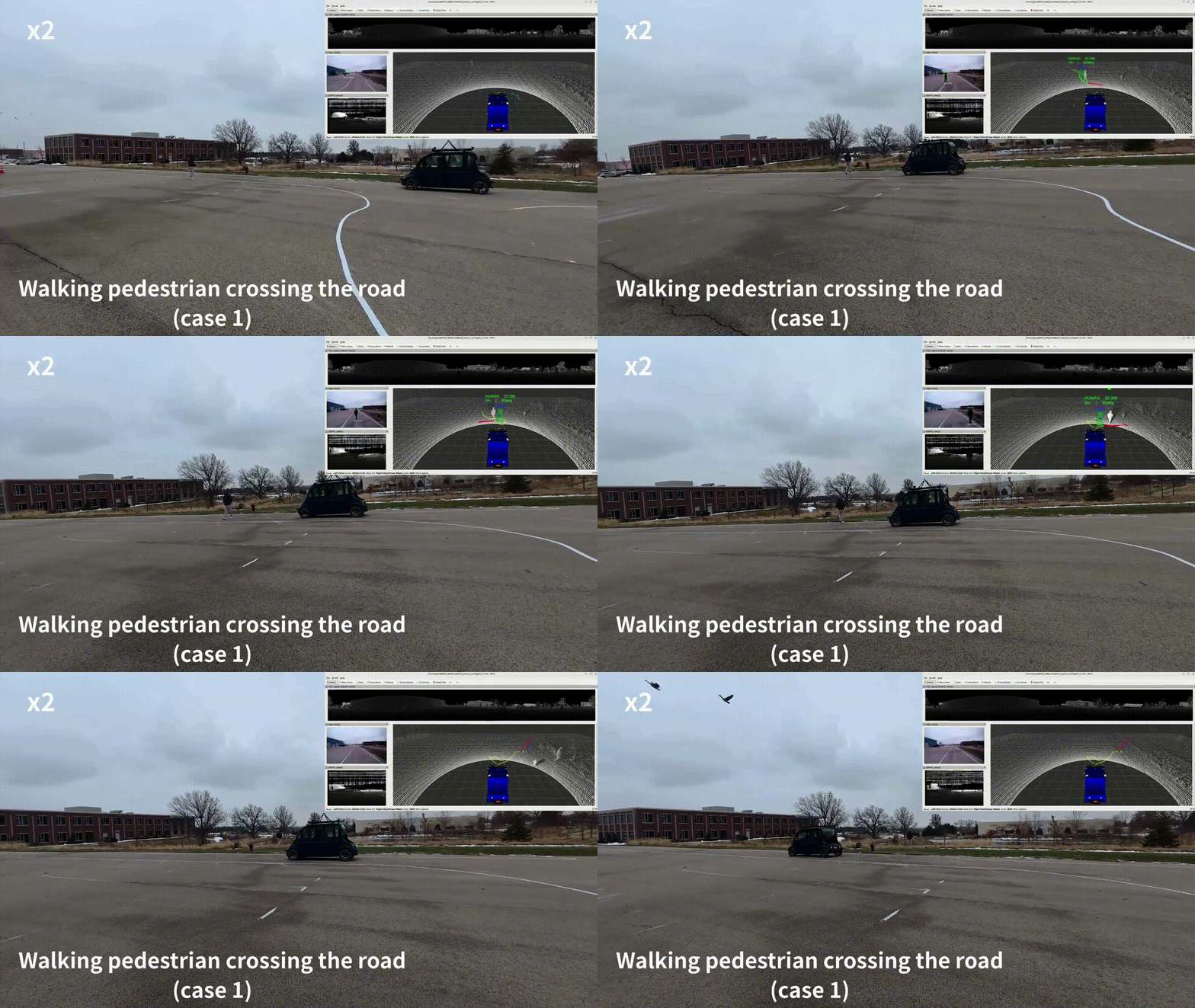
Pedestrian-Aware AV Safety System
Real-time pedestrian safety stack fusing LiDAR clustering and RGB-D detection, with Time-to-Collision estimation for proactive speed adaptation. 90% success across tested pedestrian scenarios.
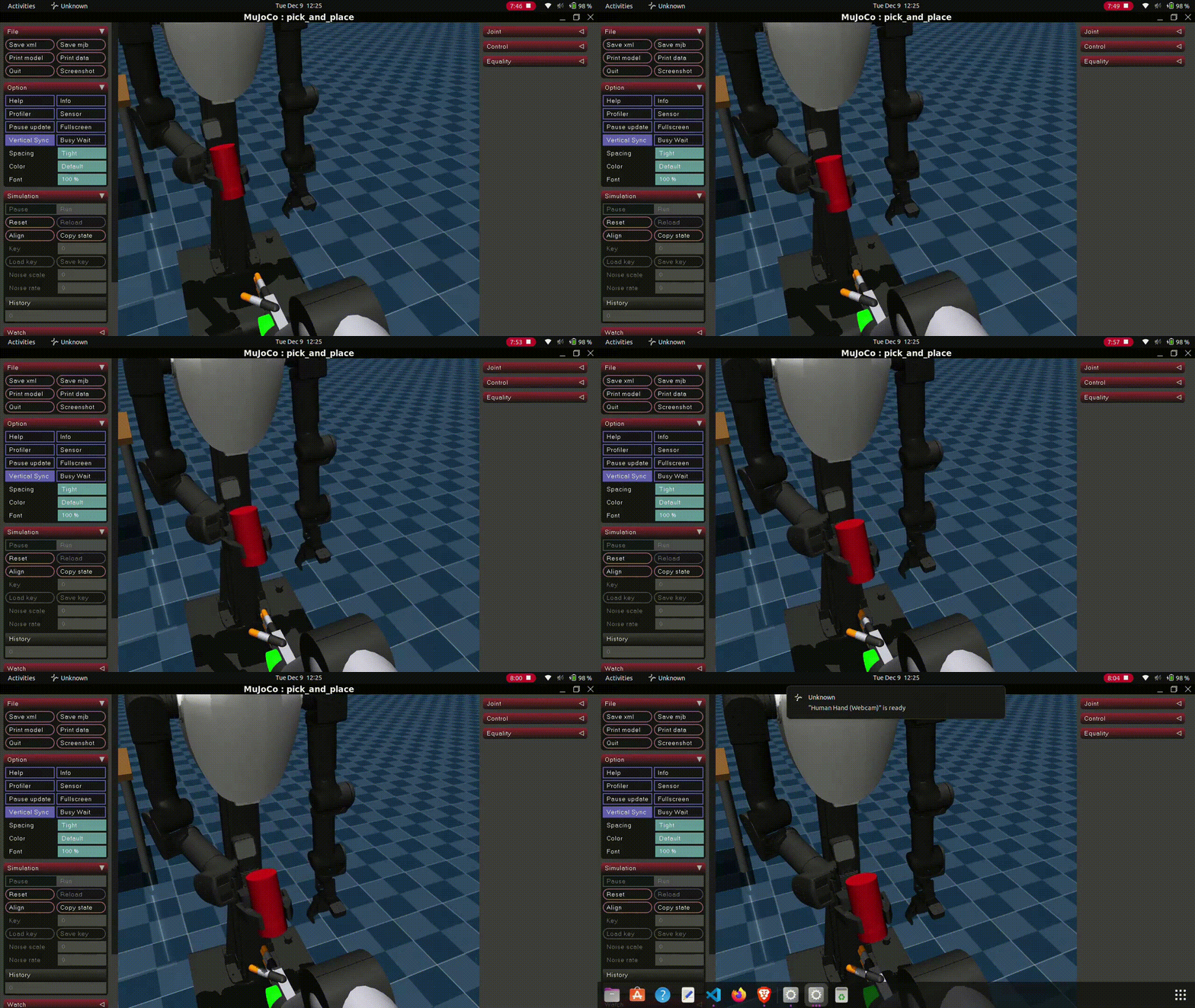
Dynamic Object Handover System
Vision-based handover with real-time MediaPipe hand tracking, Jacobian IK, velocity limiting, and command smoothing for stable object transport and adaptive release.
Terrain-Aware Navigation
Perception pipeline converting depth clouds to elevation maps for quadruped footstep placement.
RL Locomotion + Safety Layer
Terrain-adaptive locomotion trained with PPO, filtered by a real-time CBF safety layer. Zero-fall locomotion, 99% unsafe-action rejection, 90% of baseline traversal speed retained.
Quadruped Locomotion (RL)
ANYmal quadruped policies trained via Proximal Policy Optimization, with robust traversal on irregular terrain under zero-fall constraints.
VIO + Footstep Planning
Fused Visual-Inertial Odometry with footstep planning to enable navigation in GPS-denied environments with <10cm drift.
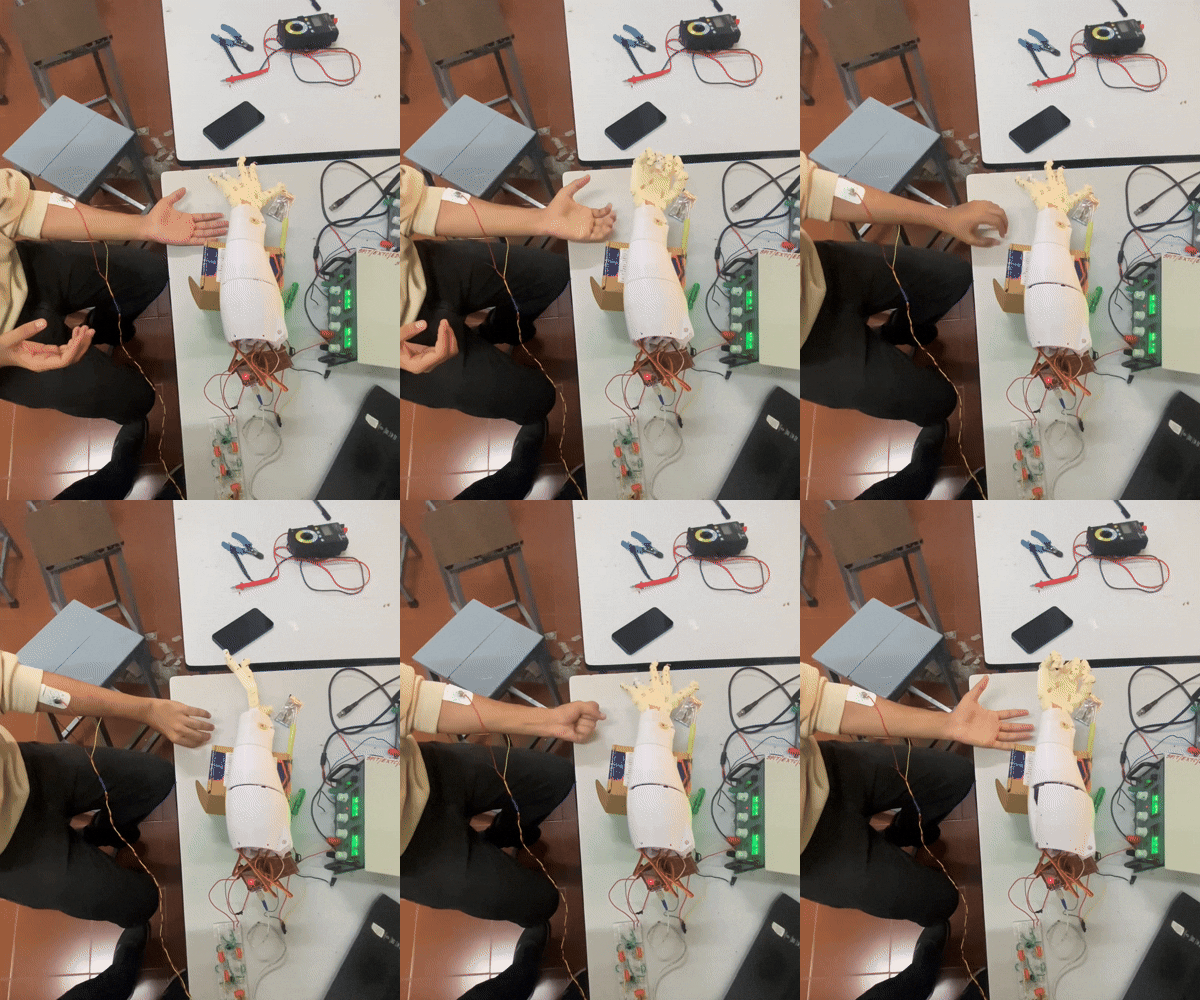
EMG-Controlled Prosthetic Arm
A 5-DOF prosthetic arm controlled via EMG signals, with real-time gesture classification on-device at 96% accuracy.